God Save the Russian Ruble
Soaring inflation and new US sanctions raise concerns over Russia’s currency stability

Russian currency made headlines this week, both at home and globally, with Western media reporting “panic” in Russia as the ruble dropped to its lowest level against the dollar in 32 months.
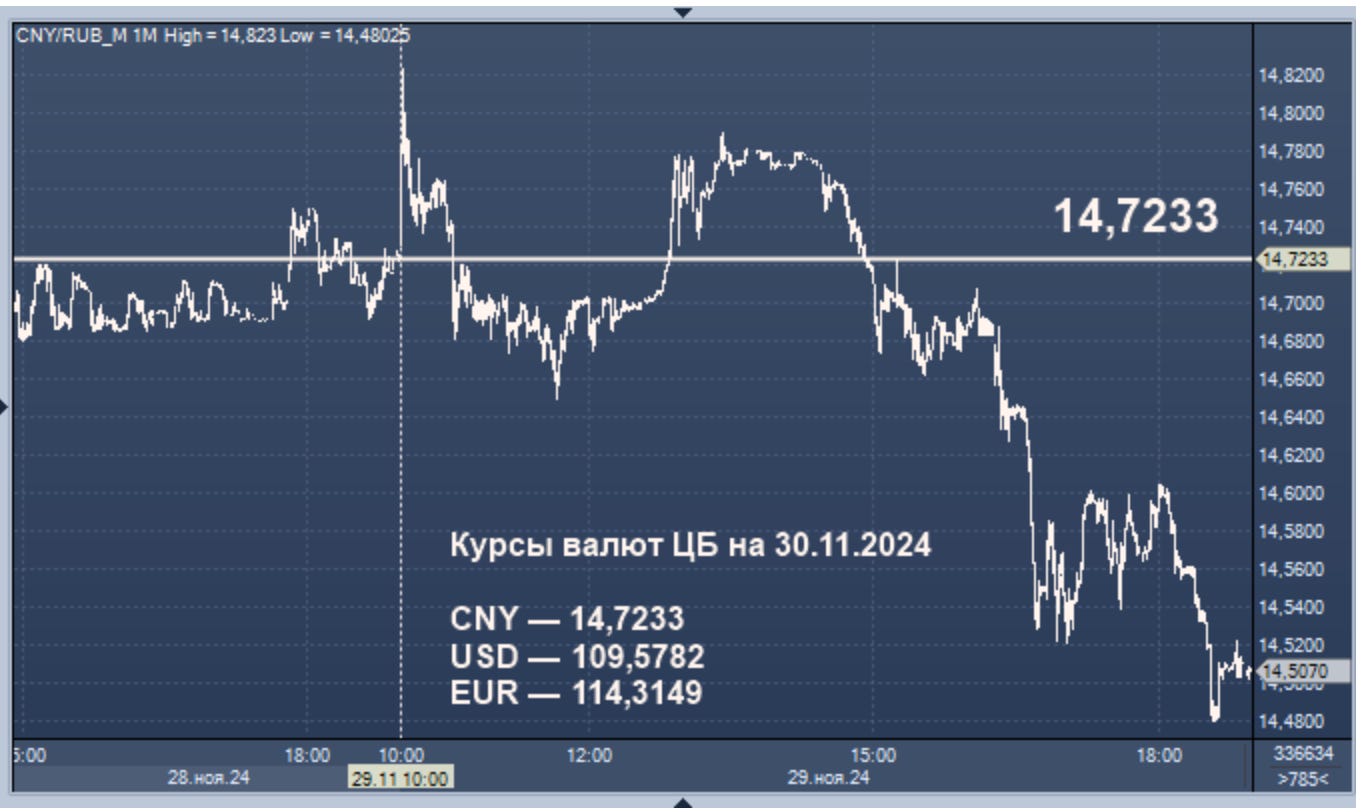
The currency fell beyond 110 to the US dollar this week for the first time since its previous record low on March 17, 2022 – three weeks after Moscow sent troops to Ukraine.
This week, the ruble lost 10% of its value against both the US dollar and the Chinese yuan within just two days. Compared to its peak in the summer, it has fallen by nearly 25%.
In an effort to combat soaring inflation, Russia's central bank suspended all foreign currency purchases for the rest of the year and began actively selling Chinese yuan to help stabilize the ruble.
Russian financial analysts explain the rapid depreciation of the ruble by several factors, all reflecting a shortage of foreign currency in the domestic market. This situation has developed after the government relaxed regulations on the return of foreign currency earnings and the sale of currency by exporters.
Additionally, on November 21, 2024, the US imposed sanctions that impacted
over 50 banks, including state-owned institutions such as Gazprombank, BCS, and Dom.RF. The most notable target was Gazprombank, which had previously been the only significant Russian lender to avoid US sanctions. This exemption was primarily due to the bank's function as a payment facilitator for foreign countries purchasing Russian gas.
Now that Gazprombank can no longer perform this role, Russia is looking at a readjustment period of several months, making it significantly more challenging to receive payments for exports.
"Now, essentially the only powerful channel for the inflow and outflow of currency from Russia has been closed," Alexander Potavin of Final said, adding that importers are quickly feeling the impact of the currency shortage. Experts estimate that this shortage in the domestic market could reach around $2-4 billion monthly in the coming months. As a result, market participants began actively purchasing foreign currency to ensure they could make payments. Speculators also played a role in this situation. The volume of currency offered in the market rapidly decreased, leading to a swift weakening of the ruble.
However, Russian Minister of Economic Development Maksim Reshetnikov suggested that the country’s economy is significantly less dependent on dollar transactions than it used to be: in the second half of the year, 82% of export transactions and 78% of import transactions were conducted in rubles and friendly currencies, he said.
Reshetnikov noted the "excessive emotional component" in the foreign exchange market, which is often the case in similar situations. In his opinion, experience shows that after a period of increased volatility, the exchange rate always stabilizes.

To be sure, the ruble has been falling since early autumn. Analysts from leading Russian banks and investment firms recently adjusted their forecasts for the ruble's exchange rate for 2024 and the subsequent three years. According to a survey published by the Central Bank, experts anticipate that in 2024, the dollar will average 94.2 rubles per dollar during the October to December period. Additionally, experts have revised their expectations for the exchange rate over the next three years upwards—to 95 rubles in 2025, 97.5 rubles in 2026, and 99.7 rubles in 2027
Following this week's rollercoaster, forecasts have been revised considering the new realities. Analysts at SberCIB Investment Research now predict that by the end of next year, the ruble may weaken against the dollar, reaching 115 ₽. Several factors are contributing to the pressure on the national currency: high inflation; potential declines in exports or transaction difficulties stemming from US sanctions; and further strengthening of the dollar driven by risks of slowing economic growth in the EU and China, exacerbated by tariff hikes imposed by President-elect Donald Trump's administration.
Natalia Milchakova, a leading analyst at Freedom Finance Global, also insisted that US President-elect Donald Trump’s warning about potential tariff hikes have instilled additional fear in the currency market, resulting in a rise of the US dollar not only against the ruble but also against all major reserve currencies, which seems to be what Trump aimed for. “The weak and unstable dynamics of oil prices are also adding negative pressure on the ruble. All these factors coincided during the last week of November, offsetting even the influence of the tax period on the Russian currency,” she said.
Milchakova, however, argues that the effects of the ruble's devaluation carry both negative and positive implications. “A cheap ruble is more beneficial for the budget than an expensive one, since at the same dollar price, a barrel of oil will cost significantly more in rubles when the ruble is weak compared to when it is strong. For exporters, a cheaper ruble is more advantageous than a stronger one; however, such fluctuations make it very difficult to plan important long-term projects,” the experts said.
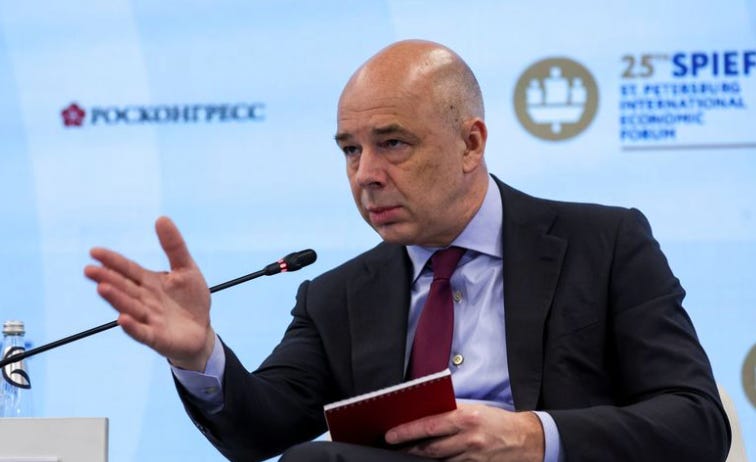
Russia’s Finance Minister Anton Siluanov argued that Russia's weak ruble was benefiting exporting companies, offsetting the negative impact of the central bank's high benchmark interest rate. "I am not saying whether the exchange rate is good or bad. I am just saying that today the exchange rate is very, very favourable for exporters," Siluanov told a financial conference in Moscow. However, a cheap ruble could only be useful in the short term for the Russian budget, economists argue, as Moscow will have to spend more on indexation, as well as providing additional subsidies for business. While the Russian economy depends on imports and Western sanctions remain in place, the ruble can only weaken.
The strengthening of the ruble has a positive impact on profitability in capital-intensive sectors primarily focused on domestic demand, such as vehicle and equipment manufacturing, textiles and apparel production, and building materials manufacturing (in the first two due to a high share of imports in costs, and in the last due to a low share of exports).
Economists point out devaluation will hit both the economy and the consumers in the long term. Central bank governor Elvira Nabiullina early this year a 10% fall in the exchange rate generates up to 0.6 percentage points of inflation. "The speed and scale of this effect depend on many factors. For us, the factor accelerating the effect now is the excessively rapid growth of domestic demand, this also creates the preconditions for the accelerated transfer of the weakening exchange rate into prices,” she noted. And the inflation is growing at a staggering rate.
Notably, there are certain structural issues when sections impact on Russia economy is concerned. Russia is struggling to bring back its foreign currency earnings – US sanctions make transactions slower and costlier. Rising costs of cross-border transactions are driving up import prices, which further pressures the ruble downward. Rising state spending is another factor – spending in the fourth quarter was 1.5 trillion rubles ($14 billion) more than expected, increasing the supply of rubles in the system. The budget approved by parliament for 2025-2027 establishes defense spending at a post-Soviet record of 6.3% of GDP.
Economists now discuss whether Russian authorities will limit the reaction to “verbal interventions” top calm down the market or could go for further interest rate hikes (which is unlikely to stop ruble from weakening unless the hike is more than 5 percentage points) or will tap the National Welfare Fund which fell 61 billion rubles to 12.7 trillion rubles or 6.6% of GDP in October, according to officials. The Finance Ministry earlier estimated that the NWF will total 11 trillion rubles or 5.6% of GDP by the end of 2024 and would stand at 12.8 trillion rubles or 6% of GDP in 2025. The Bell suggests that “n a worst-case scenario” – similar to the 2014 currency crisis – Russian President Vladimir Putin will have to "get on the phone and ask exporters to bring foreign currency into the country to buoy the ruble.” However, even this will not reverse the fundamentals, outlet believes.
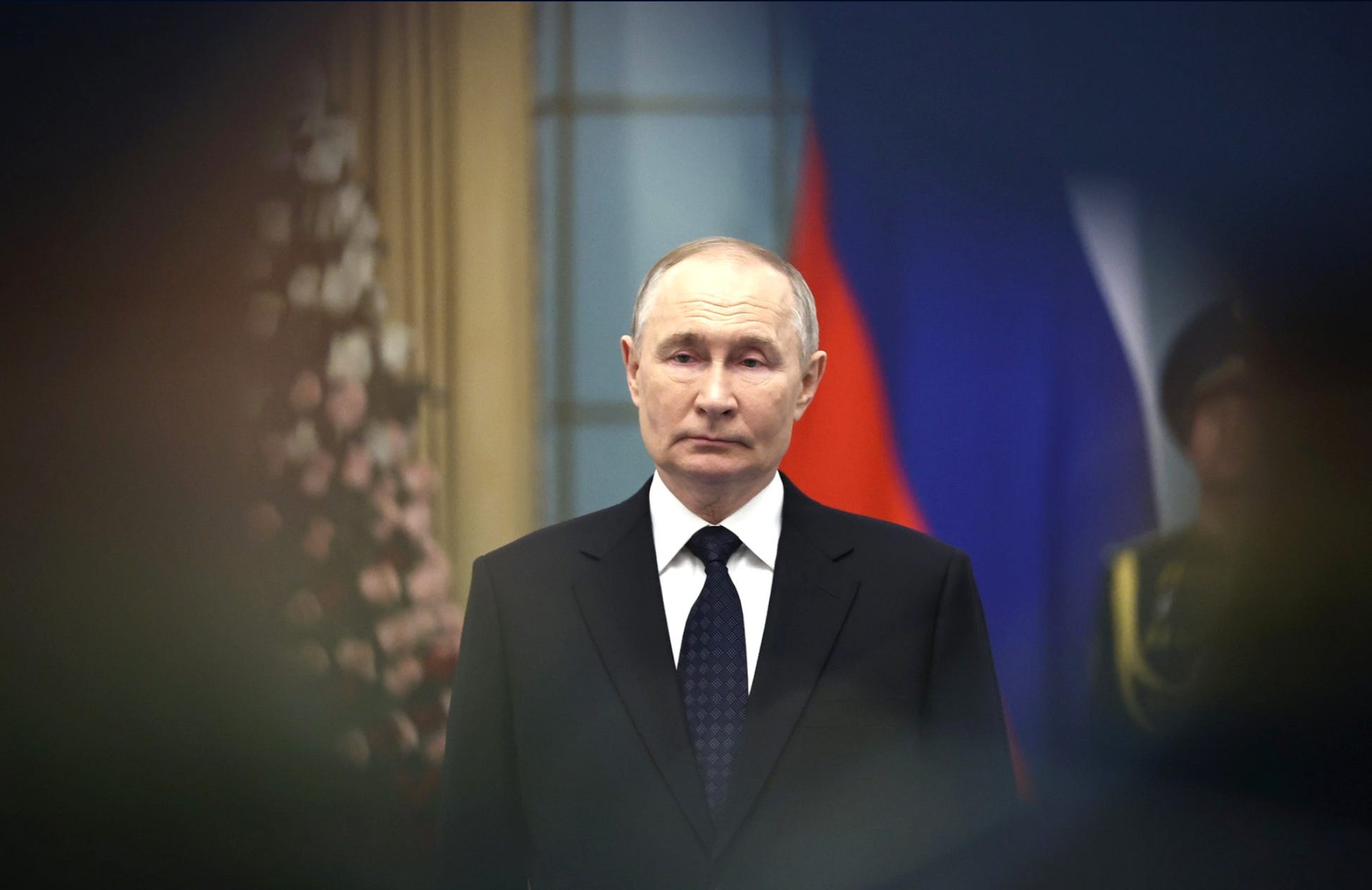
Putin, speaking in Astana on Thursday, attributed the weakening of the ruble to both inflationary processes, seasonal factors, budget payments and oil prices. The situation is under control and there is no cause for panic, he claimed. He added there are tools to combat inflation without raising the key interest rate, but the final decision rests with the Central Bank.
Deputy Chairman of the Bank of Russia stated on Friday the key interest rate is functioning effectively, and no emergency monetary policy measures are needed. He emphasized that there are no threats to financial stability. "The long-term dynamics of the exchange rate are fundamentally important. What we've observed over the past week is a very short period. Indeed, volatility caused by sanctions can create temporary currency supply imbalances in the market," he noted. Central Bank believes the measures taken are sufficient, and the situation will stabilize.