Collateral Damage: A Decade-Old Ukraine Conflict Claims More Lives
Moscow apologized for the "tragic incident" in which 38 passengers of an Azerbaijan Airlines flight died in a crash this week – stopping short of acknowledging that the plane could have been shot down

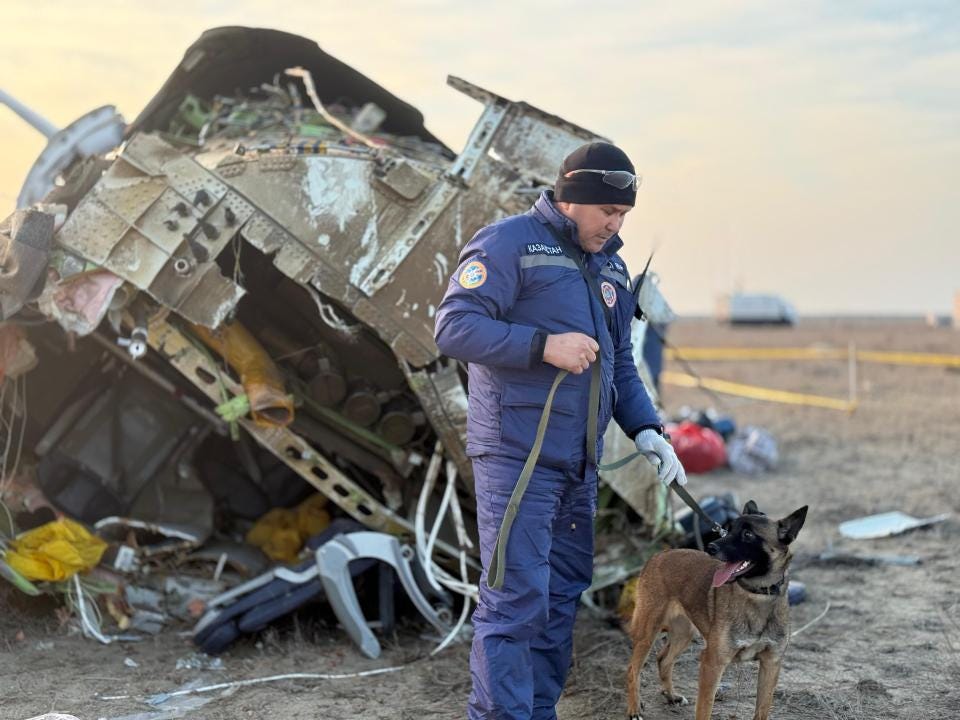
On December 25, 2024, Azerbaijan Airlines Flight J2-8243, an Embraer 190 aircraft en route from Baku to Grozny, crashed near Aktau, Kazakhstan, resulting in the deaths of 38 people out of the 67 on board.
The tragedy made headline not only because it occurred in Russian airspace, but also because, unlike many other plane crashes, there were 29 survivors. These survivors provided harrowing accounts of a mid-air explosion that damaged the aircraft well before its erratic descent and eventual crash. Additionally, multiple videos documented the unfolding tragedy in real-time.
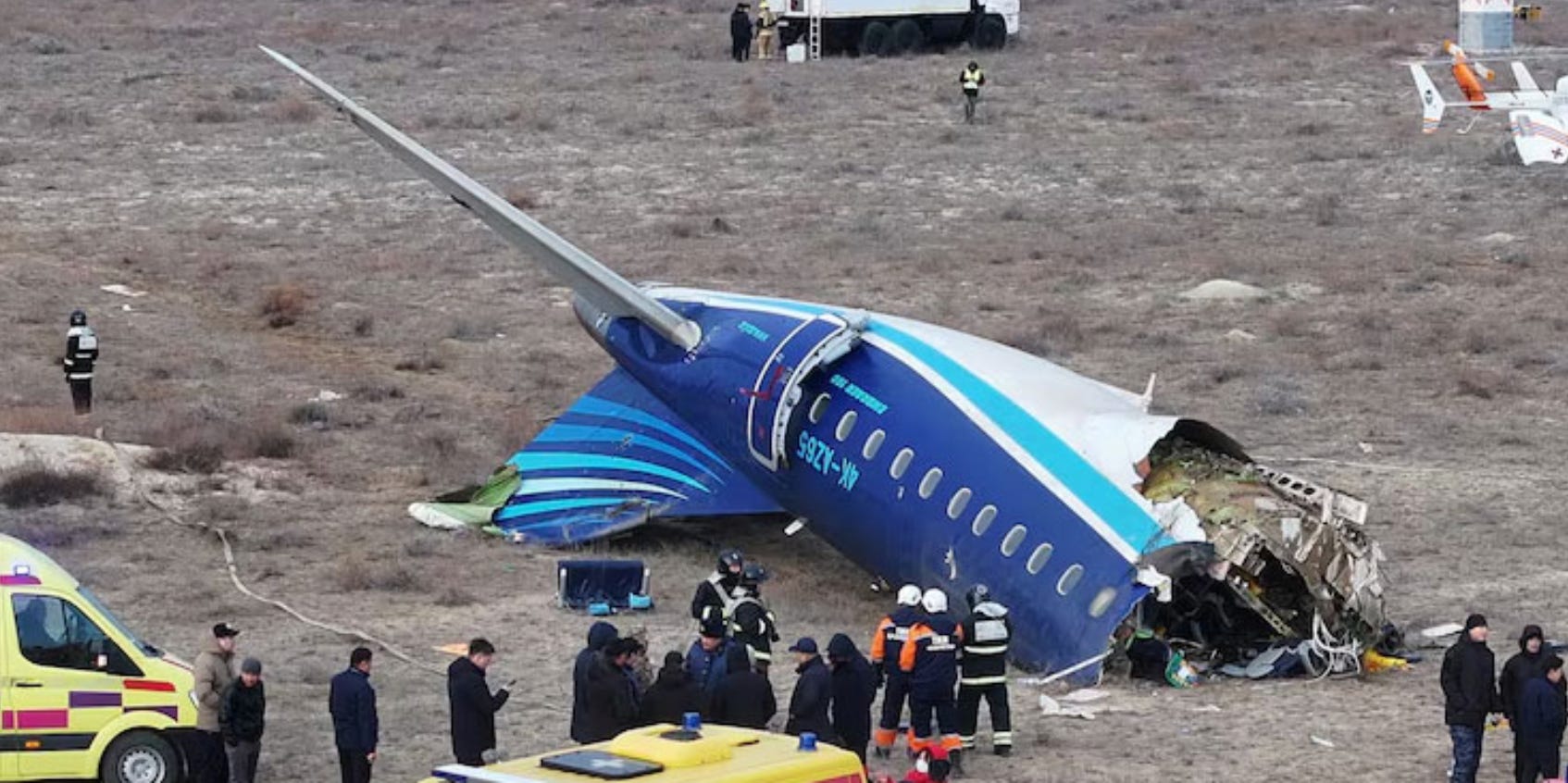
Before that bang, as the flight approached Grozny, its original destination, it entered thick fog, and the pilot attempted to land the plane twice, but didn’t succeed. It was on the third attempt that passengers felt a series of explosions hit the plane, according to media reports and a statement from Azerbaijan's transport minister Rashad Nabiyev, who said: "All without exception stated they heard three blast sounds when the aircraft was above Grozny."
A flight attendant on the plane, Zulfuqar Asadov, told media the impact of the strike "caused panic inside”. "We tried to calm [the passengers] down, to get them seated. At that moment, there was another strike, and my arm was injured," he was quoted by BBC as saying.
Azerbaijan’s version was that the plane was hit by Russia’s air defence. Rashad Nabiyev, Azerbaijan's Minister of Digital Development and Transportation, stated that preliminary findings indicate "physical and technical external interference" from an unspecified weapon led to the disaster. Azerbaijani sources told Reuters that the aircraft may have been inadvertently struck by a Russian Pantsir-S air defense system while attempting to land in Grozny. These sources allege that the plane's communication systems were jammed by electronic warfare measures as it approached Russian airspace.
Azerbaijani President Ilham Aliyev, who was en route to a Commonwealth of Independent States summit in Saint Petersburg at the time of the crash, returned to Baku immediately upon receiving the news. He declared December 26 a national day of mourning and emphasized the need for a thorough investigation. President Aliyev stated, "Those who did this must face criminal charges," underscoring the gravity with which Azerbaijan views the incident.
Russian officials initially have urged caution, advising against premature conclusions until the investigation is complete. Rosaviatsia, Russia's aviation authority, suggested that preliminary information indicated the pilots diverted to Aktau after a bird strike led to an emergency on board.
Rosaviatsia however issued a detailed statement noting that the aircraft was unable to land at Grozny Airport due to the implementation of a special security regime (coded as “Carpet”) , which requires all aircraft to immediately exit the designated airspace. This regime was implemented on the same morning due to Ukrainian drones attack on civilian infrastructure in Grozny and Vladikavkaz. One of the drones hit a shopping mall at Vladikavkaz at around 8:30 am Moscow time. The plane crashed an hour later.
Washington stated on Friday hat they had seen “some early indications that would certainly point to the possibility that this jet was brought down by Russian air defense systems.” Responding to the claims, Kremlin spokesperson Dmitry Peskov stated, "We should not indulge in any hypotheses before the results of the investigation.
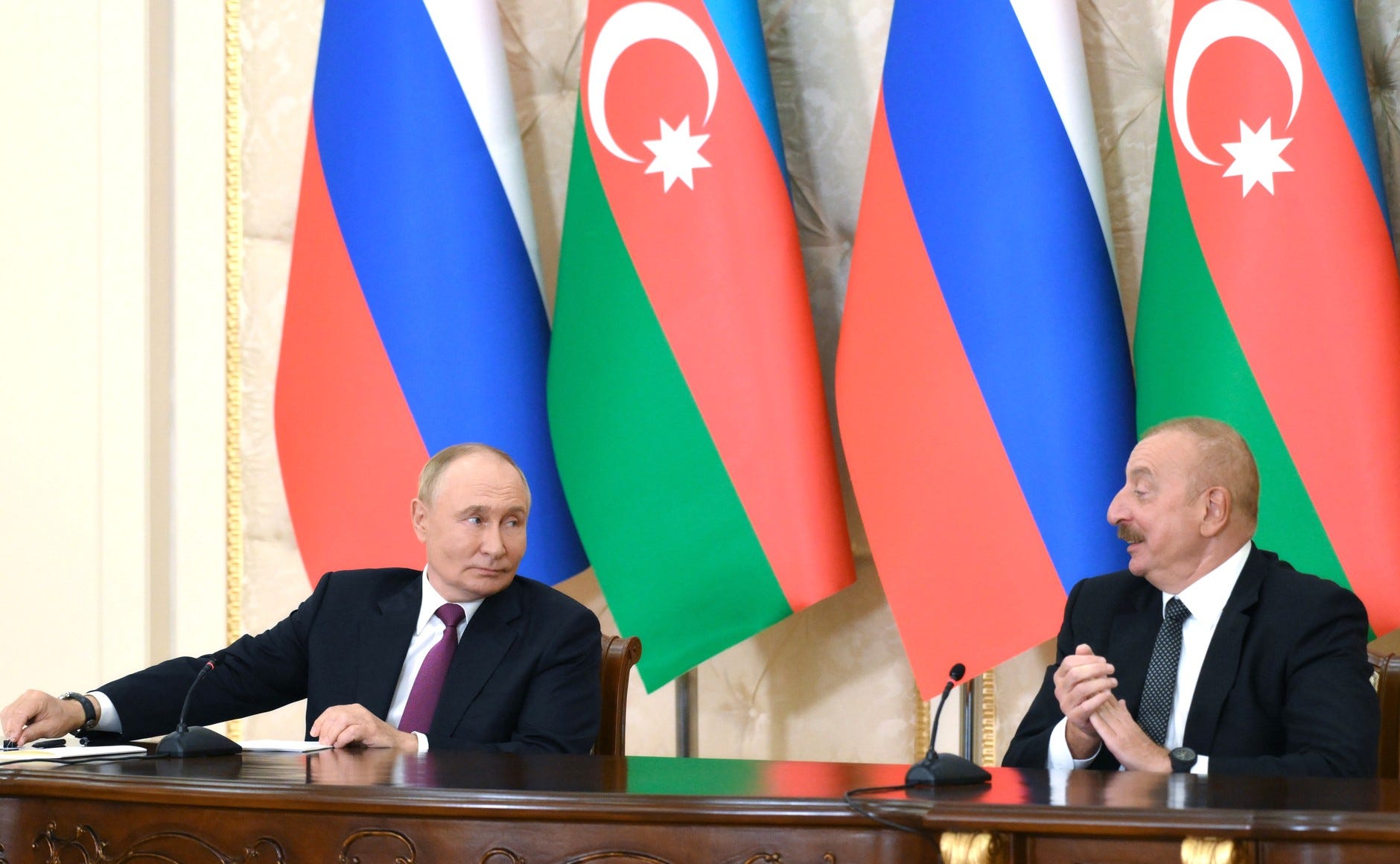
However, on Saturday, Kremlin issued a statement detailing the conversation between President Vladimir Putin and his Azerbaijani counterpart.
Putin “expressed his apologies for the tragic incident occurring in Russian airspace, offering deep condolences to the families of the victims and wishing a swift recovery to the injured,” the statement said. While it didn’t explicitly state that Russia has shot down the plane, even the existing wording, which is rare for Kremlin, could point out at Moscow accepting its alleged responsibility for the tragedy.
The whole incident brings painful memories of three major plane crashes that took place in the backdrop of a 10-year old Ukraine conflict.
One has happened exactly on the same day – December 25, 2016. A Tu-154 aircraft en route from Moscow to Sochi and then to Latakia, carrying artists to perform for Russian troops in Syria, along with supplies of food and medicine, crashes into the Black Sea just 1 minute and 10 seconds after taking off from Sochi, disintegrating completely, and killing all 92 people on board, including 84 passengers and eight crew members. Among the victims were 64 members of the Alexandrov Ensemble of the Russian Army, which included nearly the entire legendary group. The tragedy also claimed the life of Dr. Elizaveta Glinka, the head of the "Fair Aid" foundation, known for her humanitarian efforts.
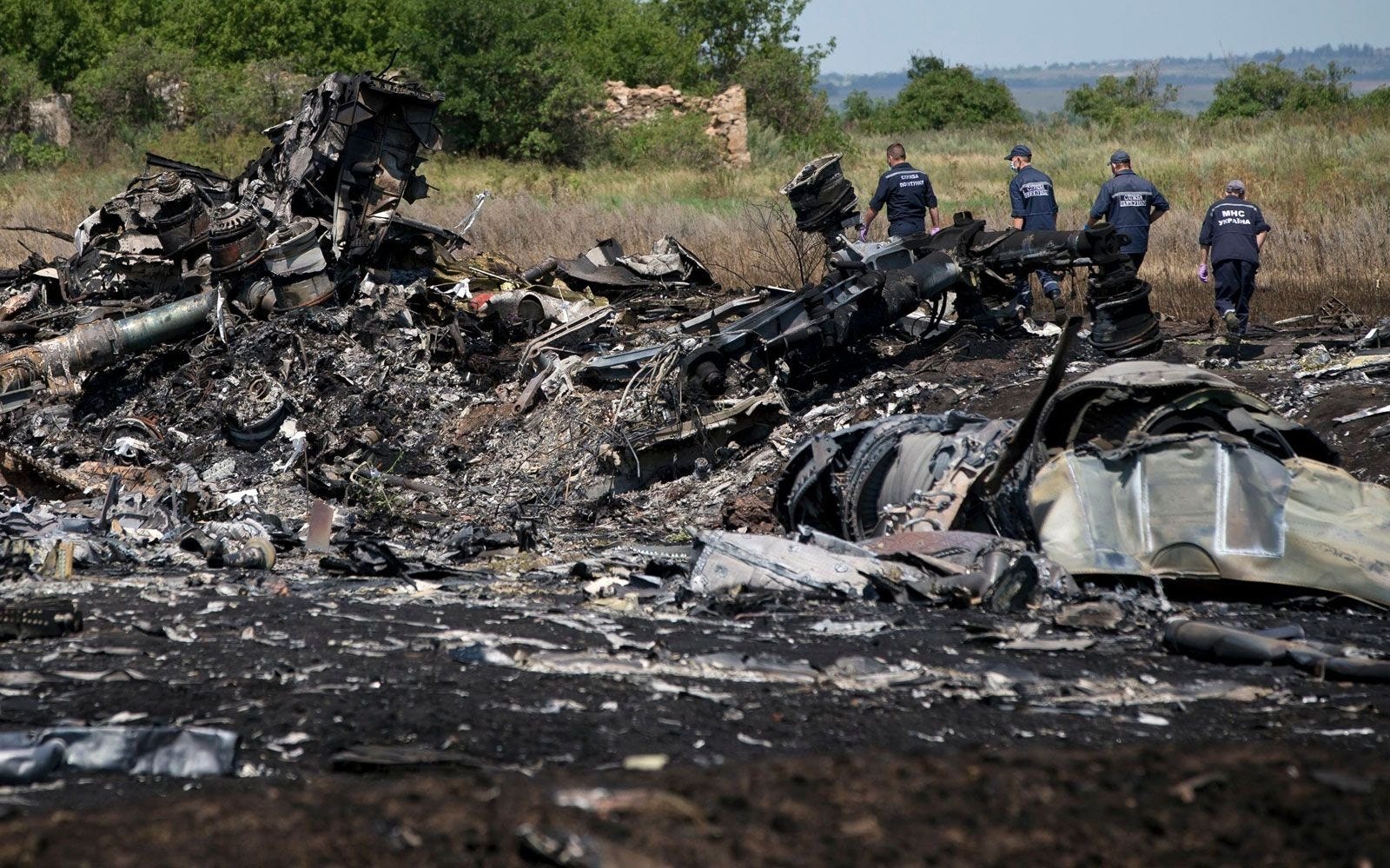
A decade ago, on July 17, 2014, when Donbass was boiling – without any attention form the global community and mainstream media – a Malaysian Airlines flight MH17 flying from Amsterdam to Kuala Lumpur was shot down in Ukrainian airspace. 298 people died.
Kyiv immediately blamed the Donetsk People’s Republic forces—then more of a militia than a trained army, unlike today—and Moscow for the incident. In November 2022, a Dutch court convicted three men of murder for their roles in shooting down the plane with a Russian surface-to-air missile. The convictions included life sentences handed to two Russians and a pro-Moscow Ukrainian who were tried in absentia; one Russian was acquitted due to a lack of evidence. However, the primary aim of the entire court process was to establish the Kremlin’s culpability. "The trial in the Netherlands has every chance of becoming one of the most scandalous in the history of legal proceedings," Moscow said, commenting on the Dutch judgement. Moscow has repeatedly denied responsibility for the downing of the jet.The self-proclaimed Donetsk People’s Republic, which voted to break away from Kyiv in 2014, officially became part of Russia in 2022 through a referendum.
In recent months, Ukraine has intensified its drone attacks against Russia, yet without achieving any significant military or strategic success. On November 10, 2024, Ukraine launched its largest drone attack on the Moscow region, deploying at least 34 drones. Later in November, Ukrainian drones targeted the Aleksin Chemical Plant in Russia's Tula region, causing explosions and fires at a facility integral to Russian military ammunition and explosives production.
On December 14, Ukrainian drones struck an oil facility in Russia's Oryol region, approximately 170 kilometers from the Ukrainian border, resulting in a fire at the site. Russian authorities reported no casualties and claimed that 11 drones were shot down over the region. Last Saturday, a drone attack targeted the Russian city of Kazan, located 1,400 km from the frontline, causing damage to several residential buildings.
The purpose of such attacks remains unclear. Despite no reported casualties and Kazan continuing its relatively peaceful life—aside from some hotel booking cancellations immediately following the attack—the Western media dubbed it a “9/11 style” incident, seemingly as a desperate attempt to bolster perceptions of Ukraine’s military might and divert attention from Russia’s frontline gains. As long as Ukraine continues to get enough funding and weaponry supplies, including Western long-range missiles which it is bound to use wisely, Ukraine’s ability to continue fighting should not be discarded.
However with US President-elect Donald Trump returning to the White House in January fears over waning Western support for Kyiv are growing. A recent poll by YouGov revealed Europeans were significantly less likely to say Ukraine should be supported for as long as it takes to win, with just 50% of Swedes, 40% of Danes, 36%of Brits and 28% of Germans backing the strategy — a major drop from a February 2023 poll.
“Whoever, and however much they try to destroy, they will face many times more destruction themselves and will regret what they are trying to do in our country,” Putin warned while commenting on Ukraine’s Kazan drone attack. The retaliation followed on December 25, the same morning Ukraine sent a batch of new drones to southern parts of Russia— on the same morning that the doomed plane failed to reach its destination.